In emerging markets like Ghana, the demand for high-quality family entertainment is surging. In 2022, a visionary operator in Accra proved that you don’t need a massive theme park to generate massive returns. By utilizing a strategic 100㎡ footprint within a premium shopping mall, this project achieved an estimated daily revenue of $1,610.
This case study explores how a curated mix of “Hero Attractions” and “Family Staples” turned a compact space into a goldmine.
Table of Contents
1.The Revenue Engine: Strategic Ride Selection
Success in a 100㎡ space depends on “High-Yield per Unit.” The Accra project selected machines that offer high perceived value, justifying a premium ticket price ($8–$10).
| Ride Type | Units | Ticket Price | Role in Business |
| Walking Robot I | 2 | $10 / 10 min | The “Visual Anchor” – High impact, attracts all ages. |
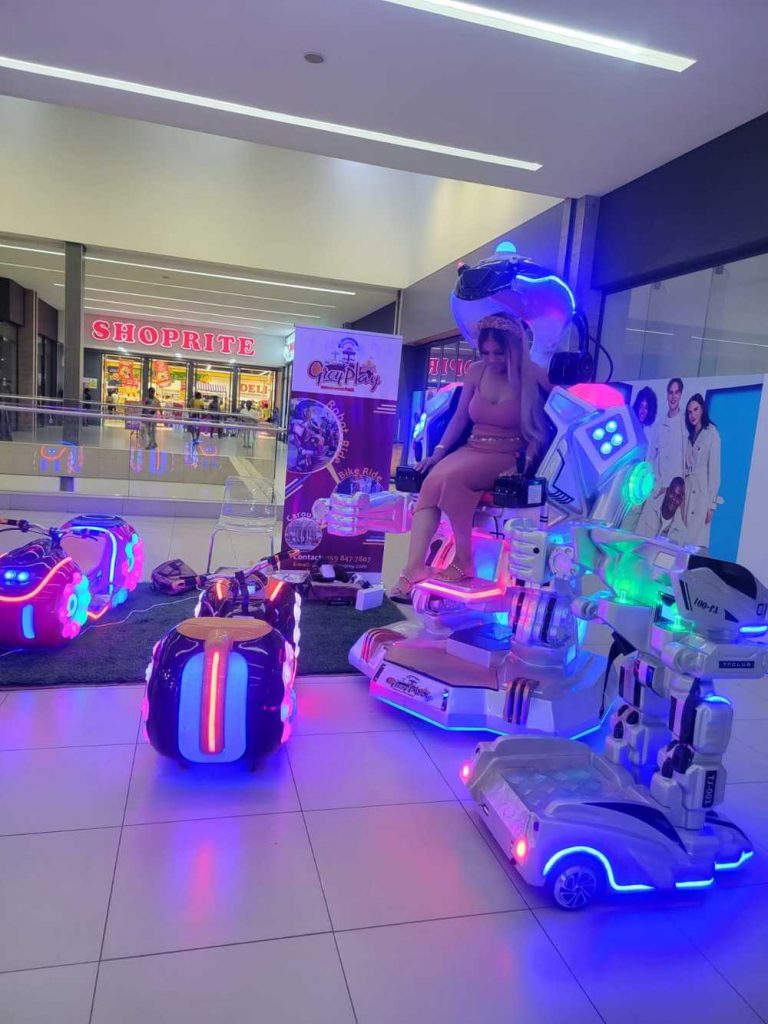
| Harli Motorcycles | 4 | $8 / 10 min | The “Volume Driver” – Perfect for parent-child bonding. |
| Kiddie Armored Robot | 1 | $10 / ride | The “Entry-Level Adventure” – Captivates younger kids. |
Daily Performance Breakdown:
With an average of 120–150 visitors daily, the venue sees high conversion. The Harli Motorcycles lead with ~95 riders per day, while the Walking Robots and Armored Robot combine for nearly 85 riders, resulting in a robust daily turnover of approximately $1,610.
2.Lessons in Market Positioning: The Family-First Strategy
The “Accra Model” succeeded by refusing to be just for kids. It positioned itself as a Family-Centered Hub, which significantly increased the “Spend per Family.”
The “Hero” Experience: The Walking Robots provide a “Giant Mech” experience that is as exciting for a 30-year-old as it is for a 10-year-old. This widens the customer base beyond toddlers.
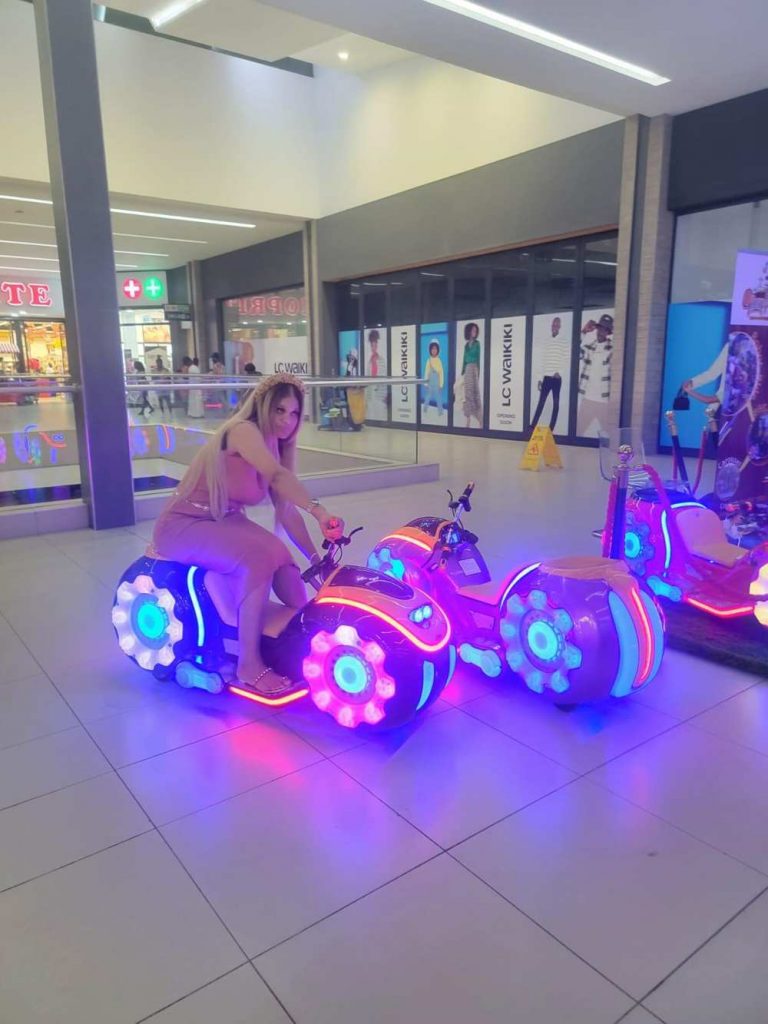
Parent-Child Synergy: The Harli Motorcycles were designed specifically to allow parents to ride with their children. This doesn’t just ensure safety; it turns the ride into a “shared memory,” which parents are far more willing to pay for repeatedly.
The “Gateway” Effect: Younger children who see older kids or parents on the large Robots naturally gravitate toward the Kiddie Armored Robot, ensuring that even the smallest family members are converted into paying customers.
3. Operational Efficiency in Compact Spaces
The Accra project highlights a vital lesson for mall-based operators: Efficiency over Area.
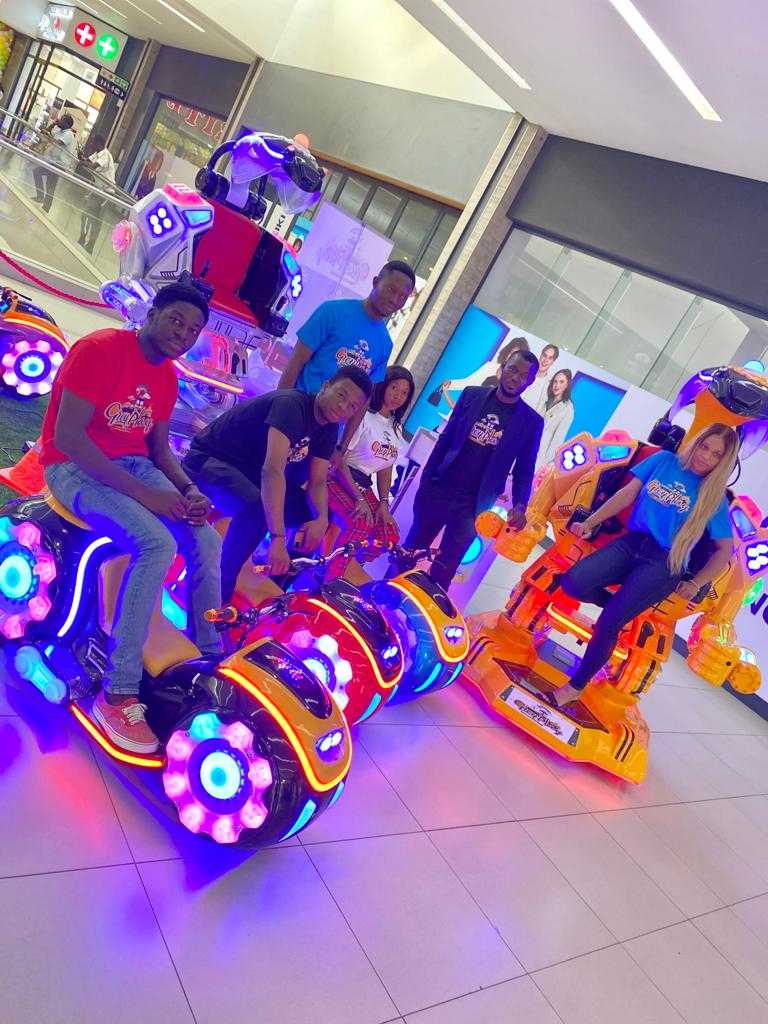
Maximized Throughput: By using mobile, battery-operated rides, the operator avoided the costs of fixed infrastructure and tracks.
Value-Based Pricing: At $1 per minute ($10/10 min), the pricing is premium for the local market, but because the machines are unique and futuristic, the “Fun Value” justifies the cost, leading to high repeat-customer rates.
Conclusion-A Scalable Model for Emerging Markets
The success in Ghana proves that the key to amusement profitability isn’t the number of machines, but the uniqueness of the attraction. With just 7 units and 100㎡ of space, this operator created a sustainable, high-revenue business that serves as a perfect B2B reference for investors looking to enter the African amusement market.
Frequently Asked Questions (FAQ)
Q: Why choose Walking Robots for a small 100㎡ space?
A: Walking Robots provide the highest “Visual Impact per Square Meter.” They draw crowds from across the mall, acting as a free marketing tool that converts foot traffic into sales without extra advertising costs.
Q: How does the Harli Motorcycle improve ROI?
A: The Harli Motorcycle has a lower barrier to entry and a seating design that encourages parents to ride with their children. This doubles the occupancy and creates a “volume” revenue stream that complements the “premium” robot rides.
Q: Are these machines durable enough for high-traffic malls in Africa?
A: Yes. Our equipment is built with high-strength materials and reliable battery systems. The Accra client reported stable operations with minimal maintenance, which is crucial for maintaining a consistent daily revenue of $1,600+.
Q: Can this model be replicated in other regions?
A: Absolutely. This 100㎡ layout is a “Plug-and-Play” model. It is ideal for shopping malls, resorts, and indoor play centers in any region with a growing middle class and high demand for family-friendly entertainment.