Executive Summary: A common misconception in the amusement industry is that “bigger is better.” However, a recent project in New Delhi, India, has shattered this myth. By operating just 3 first-generation Walking Robot kiddie rides within a compact 50-square-meter footprint, an operator is currently outperforming larger arcades, peaking at over $1,000 in daily revenue.
Table of Contents
Project Snapshot
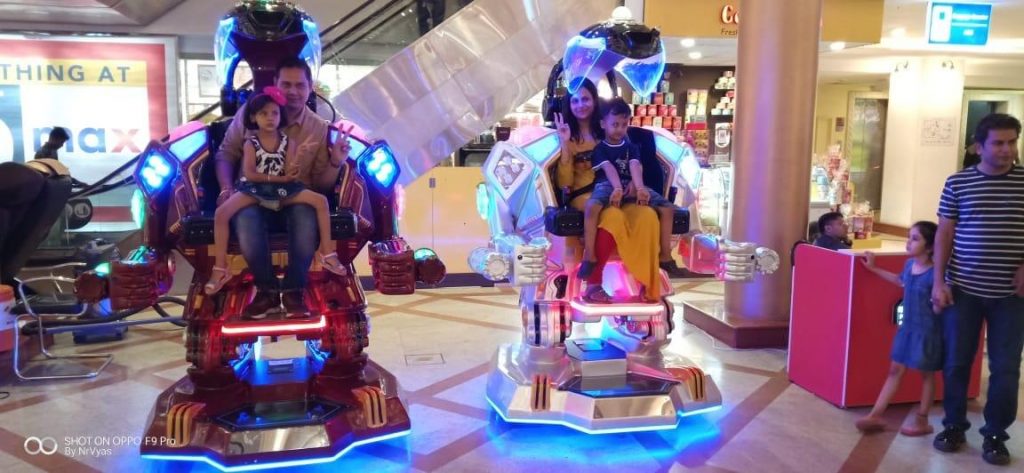
Location: 1st Floor, High-Traffic Shopping Mall, New Delhi, India
Space: 50 Square Meters
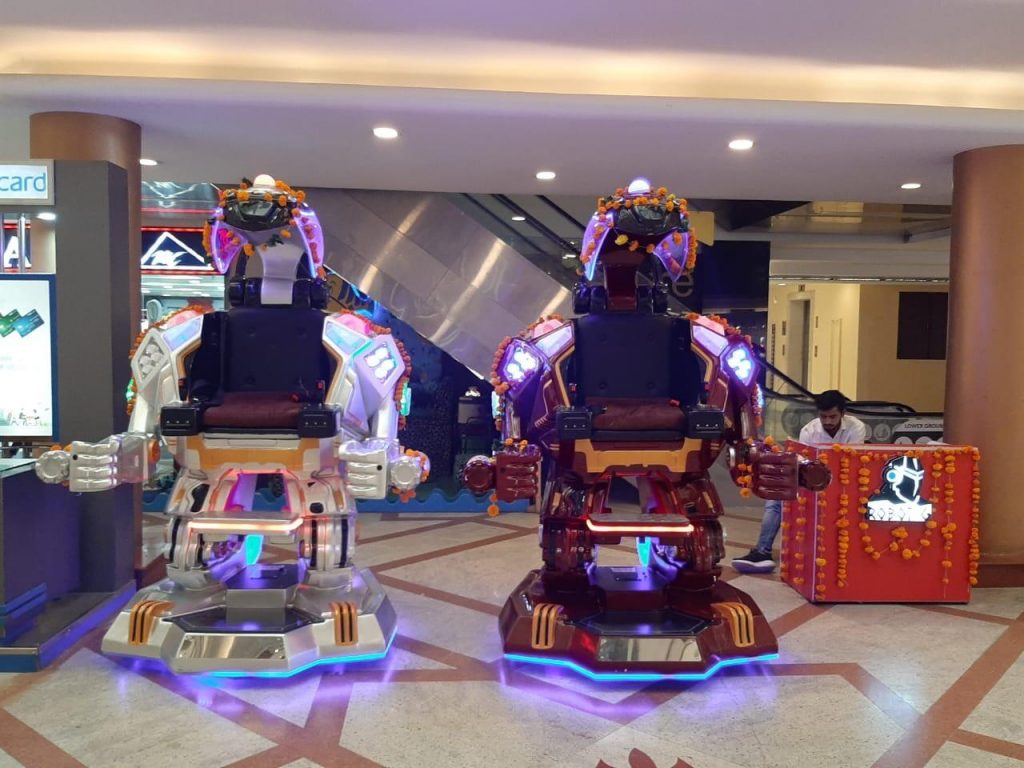
Equipment: 3 × First-Gen Walking Robot Kiddie Rides
Pricing: $8 USD per 10-minute session
Financial & Operational Performance
Despite the small footprint, the project utilizes high “floor efficiency” to drive massive turnover. By placing the robots in a central, high-visibility zone, the operator maximizes spontaneous walk-in traffic.
- Daily Capacity: Up to 144 sessions (based on 8 hours/day).
- Utilization Rate: High average of 70%–80%.
- Revenue Metrics: * Average Weekdays: $800 – $950 USD per day.
- Weekend/Holiday Peaks: $1,000+ USD per day.
Why This Small-Scale Model Outperforms Large Arcades
Strategic “First Floor” Visibility
Unlike traditional arcades hidden on top floors, this 50m² setup acts as a visual magnet. The “Mecha” design of the walking robots attracts children instantly, while the open layout allows parents to observe easily, reducing the barrier to purchase.
Optimized Space & Low Overhead
Large arcades face staggering rent and maintenance costs. This model focuses on High-Performance Units in Small Spaces. Every square meter is an active revenue generator, ensuring that the profit-to-rent ratio remains exceptionally high.
Brand Identity & Customization
The operator utilized our custom branding options, featuring specific logos and color schemes. This turned the machines from mere toys into a professional brand presence, encouraging repeat visits and building trust within the mall environment.
Key Lessons for Global Investors
This New Delhi case study provides a replicable blueprint for the “Micro-Amusement” model:
- Product Choice Trumps Space: One high-appeal, interactive machine (like the Walking Robot) is worth more than ten low-engagement machines.
- Location is the Engine: High-traffic retail hubs or transport nodes are the ideal “fuel” for this business.
- Scalability: This model is easy to manage and can be rapidly scaled across multiple mall locations with minimal capital risk.